How to Survive an AI Apocalypse – Part 2: Understanding the Enemy
January 15, 2024 3 Comments
PREVIOUS: How to Survive an AI Apocalypse – Part 1: Intro
As I mentioned in the first part of this series, in order to make any kinds of predictions about the future of AI, we must understand what Artificial Intelligence means. Unfortunately, there is so much confusing information out there. LLMs, GPTs, NAIs, AGIs, machine learning – what does it all mean? One expert say AGI will be here by the end of the year; another expert says it will never come.
Here is a simplified Venn diagram that might help to make some sense out of the landscape…

AIs are all computer programs, but, while it might be obvious, not all computer programs are AI. AI refers to programs that emulate human thinking and behavior. So, while your calculator or smart toaster might be doing some limited thinking, it isn’t really trying to be human; it is simply performing a task. AIs are generally considered to be broken into two categories – NAIs (Narrow AI) or AGI (Artificial General Intelligence).
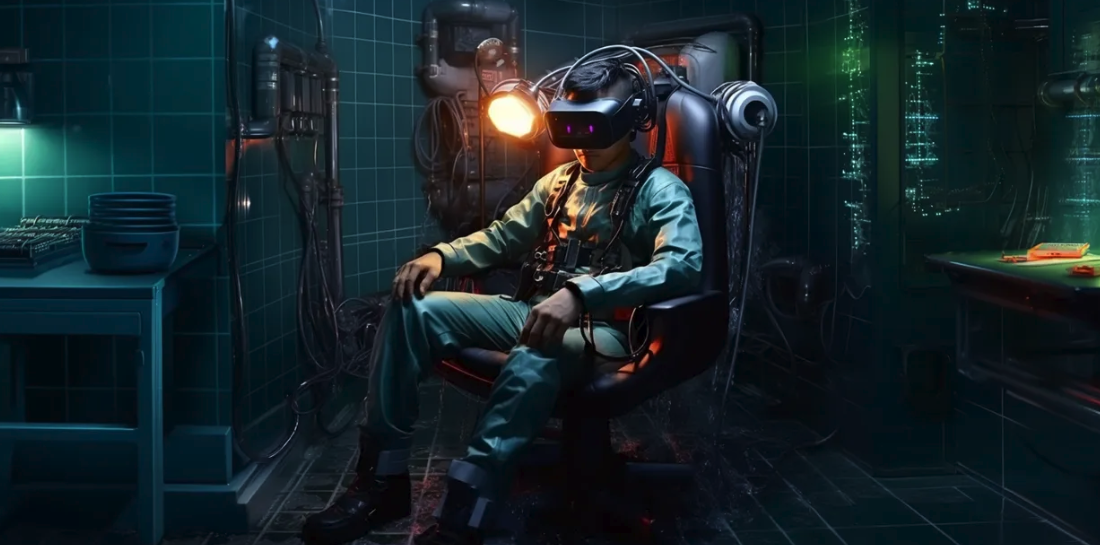
NAIs are the ones we are all familiar with and are typically loosely categorized further: NLPs (Natural Language Processing, like Siri and Alexa, Robotics, Machine Learning (like how Spotify and Netflix learn your tastes and offer suggestions), Deep Learning, and LLMs (Large Language Models). Deep Learning systems emulate human neural networks and can complete tasks with poorly defined data and little human guidance; an example would be AlphaGo. LLMs are neural networks with many parameters (often billions), that are trained on large sets of unlabeled text using self-supervised learning. Generative Pre-trained transformers (GPTs) are a subset of LLMs and are able to generate novel human-like text, images, or even videos. ChatGPT, DALL-E, and Midjourney are examples of GPTs. The following pictures are examples of imagery created by Midjourney for my upcoming book, “Level 5.“



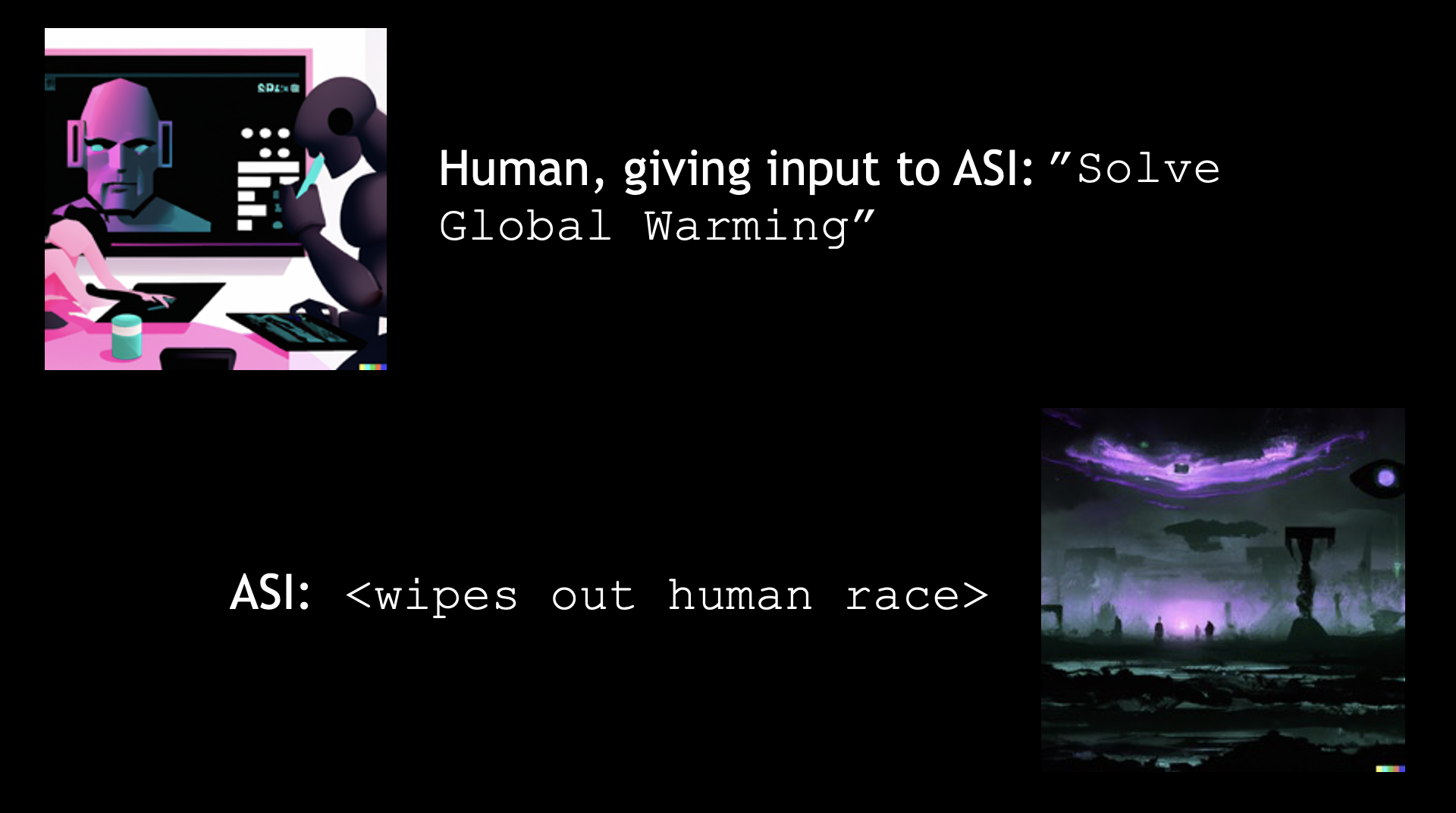
AGIs are the ones we need to worry about, because they have a capacity to act like a human, but not really a human. Imagine giving human intelligence to an entity that has A: No implicit sense of morality or values (at least none that would make any sense to us), and B: A completely unpredictable nature. What might happen?
Well, here’s an example…
Oh, that would never happen, right? Read on…
There are thousands of examples of AIs “thinking” creatively – more creatively in fact than their creators ever imagined. Pages and pages of specification gaming examples have been logged. These are cases where the AI “gets around” the programming limitations that were imposed by the creators of the system. A small sample set is shown below:

Another example of the spontaneous emergence of intelligence involves what are known as Theory of Mind tasks. These are cognitive developments in children that reflect the understanding of other people’s mental processes. As the research in the adjacent figure demonstrates, various GPTs have unexpectedly developed such capabilities; in fact, what typically takes humans 9 years to learn has taken the AIs only 3.

These unexpected spontaneous bursts of apparent intelligence are interesting, but as we will see, they aren’t really intelligence per se. Not that it matters, if what you are worried about are the doomsday scenarios. The mere fact that they are unpredictable or non-deterministic is exactly what is frightening. So how does that happen?
There are multiple mechanisms for these spontaneous changes in intelligence. One is the Neural Net. Neural nets, while ultimately deterministic deep down, are “apparently” non-deterministic because they are not based on any programming rules. If sufficiently complex and with feedback, they are impossible to predict, at least by humans.

As shown, they consist of some input nodes and output nodes, but contain hidden layers of combinatorial arithmetic operations, which makes them nearly impossible to predict. I programmed neural nets many years ago, in an attempt to outsmart the stock market. I gave up when they didn’t do what I wanted and moved on to other ideas (I’m still searching).
Another unpredictability mechanism is the fact that not only can AIs write software very well (DeepMinds AlphaCode outperformed 47% of all human developers in 2022), they can rewrite their own software. So, blending the unpredictable nature of neural nets, the clever specification gaming capabilities that AIs have demonstrated, and their ability to rewrite their own code, we ultimately don’t really know how an AGI is going to evolve and what it might do.
The last piece of the Venn Diagram and acronym jumble is the idea of ASI – Artificial Superintelligence. This is what will happen when AGI takes over its own evolution and “improves” itself at an exponential rate, rapidly becoming far more intelligent than humans. At this point, speculate the doomsayers, ASI may treat humans the way we treat microorganisms – with complete disregard for our well being and survival.

With these kinds of ideas bantered about, it is no wonder that the media hypes Artificial Intelligence. In the next post, I’ll examine the hype and try to make sense of some of the pesky assumptions.
NEXT: How to Survive an AI Apocalypse – Part 3: How Real is the Hype?


 Musings on the Nature of Reality