Materialism BS

<rant>

I have never before used my blog to rant about someone else’s writing. But I came across a rather humorous attempt at scientific reporting that is unfortunately all too common in its tone, inaccuracies, and presumptive style and I just can’t resist.

The article appeared in Gizmodo’s supposedly edgy spinoff blog SPLOID and purports to reveal an amazing new discovery that for the first time explains scientifically how out of body experiences (OBEs) are produced by the brain.

Here is a partial list of logical flaws in this report:

1. “This is the very first time that this type of experience has been analyzed and documented scientifically” – Researcher Celia Green must be having a good chuckle at this considering that she analyzed and documented hundreds of OBE accounts over 45 years ago.

2. “this may be the first documented case of someone who can get into this state at will” Robert Monroe must be guffawing from one of the remote rings, given that he and William Buhlman each had hundreds of experiences and were able to predictably initiate OBEs decades ago.

3. “This is not an astral trip, like those described by mystics. There’s no paranormal activity of any kind.” – This is where the article really crosses over into fiction.  Really?  No paranormal activity of any kind?  You’re sure about that?  Let’s consider an analogy.  The argument that the author gives for this claim is that since the fMRI (functional Magnetic Resonance Imaging) showed brain activity in regions “associated with kinesthetic imagery” that the experience must come from the brain.  First of all, “associated with” is hardly the kind of phrase that would warrant a definitive conclusion.  Second, science is not about definitive conclusions.  Science is about evidence and theories, not conclusions, facts or proofs.  The most definitive thing the science can provide is falsifiability when an observation negates a particular hypothesis.  However, in this case, it is the opposite – the University of Ottawa study is simply generating evidence that one person’s OBE correlates to some activity in a particular region of the brain – certainly not the stuff of facts, proofs, or even much of a theory.  The referenced paper is appropriately restrained in its conclusions, unlike the Gizmodo article, which takes silly leaps of logic.  So anyway, back to that analogy.  Let’s say that we break open my cell phone and attach some test equipment – an oscilloscope or logic analyzer – to some contact point in the circuitry.  My friend sends me a text message and, lo and behold, the test equipment activates.  Oooh, that must mean that the text was initiated from that part of the cell phone circuitry, rather than from the mind of my BFF.  NOT!

4. “The fact is…scientists believe that these out-of-body experiences are a type of hallucination triggered by some neurological mechanism.”  Sorry, Jordan, not clear where you get this “fact.”  You have made a sweeping generalization of the beliefs of all scientists.  Have you checked with all of the scientists?  Or did you mean to say “some scientists?”  Because most scientists with open minds would argue to the contrary.

</rant>

iphoneinside400

Embracing Virtuality

In 2009, a Japanese man married a woman named Nene Anegasaki on the island of Guam.  The curious thing was that Nene was a virtual character in the Nintendo videogame LovePlus.

OurVirtualFuture1

In 2013, Spike Jonze directed the highly acclaimed (and Academy Award nominated) film “Her”, in which the protagonist falls in love with an OS (operating system) AI (artificial intelligence).

OurVirtualFuture2

Outrageous you say?

Consider that for centuries people have been falling in love sight unseen via snail mail.  Today, with online dating, this is even more prevalent.  Philosophy professor Aaron Ben-Ze’ev notes that online technology “enables having a connection that is faster and more direct.”

So it got me thinking that these types of relationships aren’t that different from the virtual ones that are depicted in “Her” and are going to occur with increasing frequency as AI progresses.  The interactions are exactly the same; it is just that the entity at the end of the communication channel is either real or artificial.

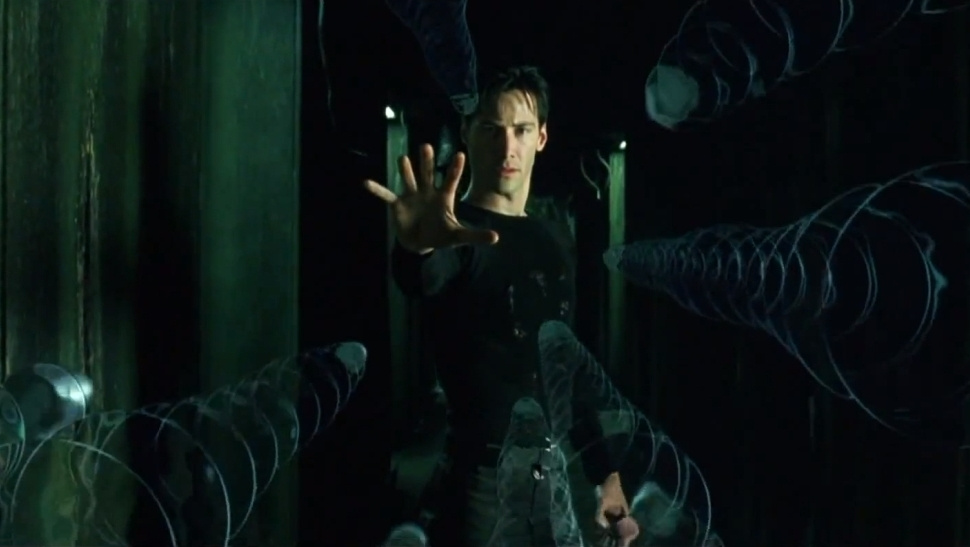
But wait, what is artificial and what is real?  As Morpheus said in “The Matrix,” “What is real? How do you define ‘real’? If you’re talking about what you can feel, what you can smell, what you can taste and see, then ‘real’ is simply electrical signals interpreted by your brain.”  This is not just philosophy; this is as factual as you can get.

As a growing number of researchers, physicists, and philosophers come to terms with the supporting evidence that we already live in a virtual reality, we realize that there is no distinction between a virtual entity that we think is virtual (such as a game character) and a virtual entity that we think is real (such as the person you are in a relationship with).  Your consciousness does not emerge from your brain; its seat is elsewhere.  Your lover’s consciousness therefore is also elsewhere.  You are interacting with it via the transfer of data and your emotions are part of your core consciousness.  Does it matter whether that data transfer is between two conscious entities outside of physical reality or between a conscious entity and another somewhat less conscious entity?

As technology progresses, AI advances, and gaming and simulations become more immersive, falling in love or having any other kind of emotional experience will be occurring more and more frequently with what we today think of as virtual entities.

Now, it seems shocking.  Tomorrow it will be curious.  Eventually it will be the norm.

Nature, Nurture, Neither?

Most of us are aware of (or may be part of) a family where siblings are radically different from each other, their personalities, interests, and value systems sometimes seeming to be completely opposite.  It is difficult to chalk this up to either nature or nurture because both parties couldn’t have a more common nature environment, or common nurture environment.  Having been raised in the same household for their entire lives, and being biologically from the same sets of DNA, what could possibly cause such stark differences?

Psychologists and biologists have attempted to tease out the influential factors by studying criminal records, IQ, personality traits, and sexual preferences of identical twins raised together, identical twins raised apart, adoptive siblings raised together, fraternal twins, siblings, and random pairs of strangers.  Criminality appears to have influences from both nature and nurture, while IQ seems largely hereditary.  Some studies support the conclusion that personality traits are mostly hereditary, while others lean toward environmentSexual preference appears to be unrelated to DNA, yet is also hard to explain by environment alone, given the results of identical twin studies.  However, even in studies of these traits, where correlations are observed, the correlations tend to be small, leaving a large portion of the reason for such traits up in the air.

Mathematically, nature plus nurture doesn’t appear to explain why we are the way we are.  However, if instead we adopted the well-supported and researched view that we are not our bodies, then our consciousness exists independent of our bodies.  As such, it is reasonable to expect that that consciousness learns, adapts, and evolves across multiple lifetimes, and perhaps non-physical experiences.  And this would certainly provide an excellent explanation for the anomalies listed above.  It would make sense, for example, that IQ, perhaps being related to the function of the brain, be largely influenced by genetics.  However, it would not make sense for value systems to be genetic, and the influence from family environment would only extend back to childhood; hence personality traits should show some nurture correlation from “this life”, with the majority of the influence being from past lives (and therefore, a mystery to those who don’t understand or accept this paradigm).

Research supports this view and notes that ‘many aspects of the child’s present personality have carried forward intact from the past life: behavior, emotions, phobias, talents, knowledge, the quality of relationships, and even physical symptoms.’  Sadly, such research is as heretical to scientific orthodoxy as heliocentrism was 500 years ago, although referring to it as epigenetics may be a safe way for scientists to dip their toes into the water without getting scalded.

So, the next time someone gets on your case for not living up to the family ideal, smile knowingly, and be proud of your karmic heritage.

nature_vs_nurture2

Quantum Zeno Effect Solved

Lurking amidst the mass chaos of information that exists in our reality is a little gem of a concept called the Quantum Zeno Effect.  It is partially named after ancient Greek philosopher Zeno of Elea, who dreamed up a number of paradoxes about the fluidity of motion and change.  For example, the “Arrow Paradox” explores the idea that if you break down time into “instants” of zero duration, motion cannot be observed.  Thus, since time is composed of a set of instants, motion doesn’t truly exist.  We might consider Zeno to have been far ahead of his time as he appeared to be thinking about discrete systems and challenging the continuity of space and time a couple thousand years before Alan Turing resurrected the idea in relation to quantum mechanics: “It is easy to show using standard theory that if a system starts in an eigenstate of some observable, and measurements are made of that observable N times a second, then, even if the state is not a stationary one, the probability that the system will be in the same state after, say, one second, tends to one as N tends to infinity; that is, that continual observations will prevent motion …”.  The term “Quantum Zeno Effect” was first used by physicists George Sudarshan and Baidyanath Misra in 1977 to describe just such a system – one that does not change state because it is continuously observed.

The challenge with this theory has been in devising experiments that can verify or falsify it.  However, technology has caught up to philosophy and, over the last 25 years, a number of experiments have been performed which seem to validate the effect.  In 2001, for example, physicist Mark Raizen and a team at the University of Texas showed that the effect is indeed real and the transition of states in a system can be either slowed down or sped up simply by taking measurements of the system.

I have enjoyed making a hobby of fully explaining quantum mechanics anomalies with the programmed reality theory.   Admittedly, I don’t always fully grasp some of the deep complexities and nuances of the issues that I am tackling, due partly to the fact that I have a full time job that has naught to do with this stuff, and partly to the fact that my math skills are a bit rusty, but thus far, it doesn’t seem to make a difference.  The more I dig in to each issue, the more I find things that simply support the idea that we live in a digital (and programmed) reality.

The quantum Zeno effect might not be observed in every case.  It only works for non-memoryless processes.  Exponential decay, for instance, is an example of a memoryless system.  Frequent observation of a particle undergoing radioactive decay would not affect the result.  [As an aside, I find it very interesting that a “memoryless system” invokes the idea of a programmatic construct.  Perhaps with good reason…]

A system with memory, or “state”, however, is, in theory, subject to the quantum Zeno effect.  It will manifest itself by appearing to reset the experiment clock every time an observation is made of the state of the system.  The system under test will have a characteristic set of changes that vary over time.  In the case of the University of Texas experiment, trapped ions tended to remain in their initial state for a brief interval or so before beginning to change state via quantum tunneling, according to some probability function.  For the sake of developing a clear illustration, let’s imagine a process whereby a particle remains in its initial quantum state (let’s call it State A) for 2 seconds before probabilistically decaying to its final state (B) according to a linear function over the next second.  Figure A shows the probability of finding the particle in State A as a function of time.  For the first 2 seconds, of course, it has a 0% probability of changing state, and between 2 and 3 seconds it has an equal probability of moving to state B at any point in time.  A system with this behavior, left on its own and measured at any point after 3 seconds, will be in State B.

probability

What happens, however, when you make a measurement of that system, to check and see if it changed state, at t=1 second?  Per the quantum Zeno effect, the experiment clock will effectively be reset and now the system will stay in State A from t=1 to t=3 and then move to state B at some point between t=3 and t=4.  If you make another measurement of the system at t=1, the clock will again reset, delaying the behavior by another second.  In fact, if you continue to measure the state of the system every second, it will never change state.  Note that this has absolutely nothing to do with the physical impact of the measurement itself; a 100% non-intrusive observation will have exactly the same result.

Also note that, it isn’t that the clock doesn’t reset for a memoryless system, but rather, that it doesn’t matter because you cannot observe any difference.  One may argue that if you make observations at the Planck frequency (one per jiffy), even a memoryless sytem might never change state.  This actually approaches the true nature of Zeno’s arguments, but that is a topic for another essay, one that is much more philosophical than falsifiable.  In fact, “Quantum Zeno Effect” is a misnomer.  The non-memoryless system described above really has little to do with the ad infinitum inspection of Zeno’s paradoxes, but we are stuck with the name.  And I digress.

So why would this happen?

It appears to be related in some way to the observer effect and to entanglement:

  • Observer Effect – Once observed, the state of a system changes.
  • Entanglement – Once observed, the states of multiple particles (or, rather, the state of a system of multiple particles) are forever connected.
  • Quantum Zeno – Once observed, the state of a system is reset.

What is common to all three of these apparent quantum anomalies is the coupling of the act of observation with the concept of a state.  For the purposes of this discussion, it will be useful to invoke the computational concept of a finite state machine, which is a system that changes state according to a set of logic rules and some input criteria.

I have explained the Observer effect and Entanglement as logical necessities of an efficient programmed reality system.  What about Quantum Zeno?  Why would it not be just as efficient to start the clock on a process and let it run, independent of observation?

A clue to the answer is that the act of observation appears to create something.

In the Observer effect, it creates the collapse of the probability wave functions and the establishment of definitive properties of certain aspects of the system under observation (e.g. position).  This is not so much a matter of efficiency as it is of necessity, because without probability, free will doesn’t exist and without free will, we can’t learn, and if the purpose of our system is to grow and evolve, then by necessity, observation must collapse probability.

In Entanglement, the act of observation may create the initiation of a state machine, which subsequently determines the behavior of the particles under test.  Those particles are just data, as I have shown, and the data elements are part of the same variable space of the state machine.  They both get updated simultaneously, regardless of the “virtual” distance between them.

So, in Quantum Zeno, the system under test is in probability space.  The act of observation “collapses” this initial probability function and kicks off the mathematical process by which futures states are determined based on the programmed probability function.  But that is now a second level of probability function; call it probability function 2.  Observing this system a second time now must collapse the probability wave function 2.  But to do so means that the system would now have to calculate a modified probability function 3 going forward – one that takes into account the fact that some aspect of the state machine has already been determined (e.g. the system has or hasn’t started its decay).  For non-memoryless systems, this could be an arbitrarily complex function (3) since it may take a different shape for every time at which the observation occurs.  A third measurement complicates the function even further because even more states are ruled out.

On the other hand, it would be more efficient to simply reset the probability function each time an observation is made, due to the efficiency of the reality system.

The only drawback to this algorithm is the fact that smart scientists are starting to notice these little anomalies, although the assumption here is that the reality system “cares.”  It may not.  Or perhaps that is why most natural processes are exponential, or memoryless – it is a further efficiency of the system.  Man-made experiments, however, don’t follow the natural process and may be designed to be arbitrarily complex, which ironically serves to give us this tiny little glimpse into the true nature of reality.

What we are doing here is inferring deep truths about our reality that are in fundamental conflict with the standard materialist view.  This will be happening more and more as time goes forward and physicists and philosophers will soon have no choice but to consider programmed reality as their ToE.


matrix-stoppingreality

The Consensus Reality Spectrum

I have recently been on a quest to learn more about the greater “landscape” of realities and have actually had some rewarding successes.  I call them all realities, because the definition of the word “real” is entirely arbitrary and subjective; hence, everything may be considered a reality.  During a recent lucid dream, I had a revelation.  In retrospect, it doesn’t seem as substantial of an idea now as it did then, but here is the gist of it:

The only significant difference between a dream state and what we think of as our “normal physical reality” is the level of consensus that is applied to it.

When we dream or fantasize, our minds are fully in control of creating the reality that we take part in.  In our physical world, however, this is clearly not the case.  We can’t just make the sky red, fly, or defy the laws of physics.  However, there is incontrovertible evidence that we can mold our reality, as demonstrated by:

And, as if to put the final nail in the materialistic determinism coffin, scientists at the prestigious IQOQI institute in Vienna, demonstrated to a certainty of 1 part in 1E80 that objective reality does not exist.

So why does physical reality seem so real?  It is because it is designed that way.  We are much more likely to learn when we believe in well-grounded cause and effect.  Seriously, when was the last time you actually consciously learned something from a dream? (Subconsciously, that is a different story.)  In order for us to get something useful out of this physical-matter-reality learning lab, we must believe it is somehow more real than what we can conjure up in our minds.  But, again, all that means is that our experience is relatively consistent with that of our free-willed friends and colleagues.  She sees a blue car, you see a blue car, you both describe it the same way, it therefore seems real and objective.  Others have referred to this as a consensus reality, a descriptor that fits well.

It is not unlike a large-scale computer game.  In a FPS (first person shooter), only you are experiencing the sim.  In an MMORPG (massively multiplayer online role playing game), everyone experiences the same sim.  However, if you think about it, there is no reason why the game can’t present different aspects of the sim to different players based on their attributes or skills.  In fact, this is exactly what some games do.

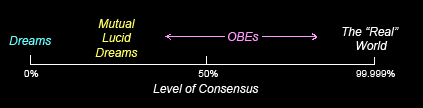
So, one can imagine a spectrum of “consensus influence”, with various realities placed somewhere on that spectrum.  At the far left, is solipsism – realities that belong to a singular conscious entity.  We may give this a consensus factor of 0, since there is none.  At the other end of the spectrum is our physical matter reality, what most of us call “the real world.”  We can’t give it a consensus factor of 100, because of the observer effect.  100 would have to be reserved for the concept of a fully deterministic reality, a concept which, like the concept of infinity, only exists in theory.  So our physical matter reality (PMR) is 99.99-something.

Everything else falls in between.

consensusrealities

Many researchers have experienced realities at various points on this spectrum.  Individual OBEs that have closely locked into PMR are at the high-consensus end of the scale.  OBEs that are more fluid are somewhere in the middle.  Mutual lucid dreaming can be considered a consensus of two and is therefore somewhere toward the low-consensus side of the spectrum.

I believe that this may be a useful model for those psychonauts, astral travelers, and quantum physicists among us.

Signs of Real Humanity Evolution

We humans spend a lot of time talking about and worrying about and doing stuff that doesn’t really matter in the grand scheme of things.  And I’m not just talking about the obvious things, like Real Housewives of New Jersey.  I mean stuff that the media and schools tell us is important.  Including stuff that I used to think was important – like politics, GMOs, how “big chemical” is poisoning us, the revolving door between government, finance and business, widespread corruption, and how the financial elite continues to fleece us peons.  I still think these things are important, because they impact those whom we care about.

But, from a broader, larger, and historical perspective, which party wins the election, what the stock market does, which countries rise or fall, or who wins the war, are, to quote Dr. Evil, “quite inconsequential.”  It’s like rearranging deck chairs on the Titanic.  Everyone dies and new humans take their place.  Every civilization declines and new ones rise.

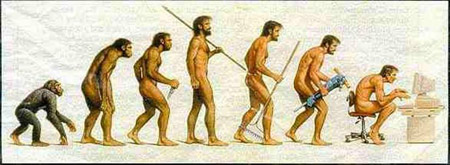
Where is the evolution of humanity?

Evolution Devolution

It is a mistake to think it is found in science or technology.  As much as I love gadgets and the bleeding edge of high tech, products do not equate to the evolution of a species.  Cloning, nuclear power, nanotech, and 3D printing are not signs of human evolution.  They are merely examples of our ability to control matter.

Nor are medical advances that extend our life expectancy.  Does it really make sense that living longer evolves our species in some way?  On the contrary, it only causes more problems.  Humans now have to compete with an ever-increasing number of humans for limited resources.  Instead of dying of quickly of natural causes, we live past our natural life expectancy and instead die slowly and miserably, often without dignity.  And the increasing human population rapidly takes away and destroys habitats for countless species of other conscious life forms, as well as using them for cruel experimental medical research, which continues the cycle and only serves to make big pharmaceutical companies even bigger.  It is all based on the mistaken assumption that we live in a cold materialistic objective reality.  Hardly evolved thinking.

All is not lost however.  Despite the war profiteers and religious nuts that contribute to the devolution of humanity, we slowly progress in the right direction.  From the Magna Carta in 1215 to the United States Bill of Rights in 1789 to broader recognition of gender and racial equality in the 20th Century, to the fact that homicide rates have dropped by a factor of 30 in Europe over the past 500 years, it can be said that this trend represents positive evolution.

Another good sign is the general trend away from religious dogma and toward spiritual growth.  The percentage of Americans who don’t identify with a particular religious preference has grown steadily from 2% in 1950 to 16% in 2010.  At the same time, the desire for “spiritual growth” has increased from 58 percent in 1994 to 82% five years later, according to a USA Today/Gallup poll.  Why is this a sign of evolution?  Because religious dogma teaches you that you are right and they are wrong, while unaffiliated spiritual discovery almost always results in the recognition that love is what really matters.

And finally, my favorite sign of human evolution is exemplified by what India did a few months ago in declaring dolphins to be “non-human persons” with similar rights including the right not to be held captive.  Three other countries have similar laws and more are sure to follow.  I believe that this, along with a significant trend away from cruel animal practices (think free range chickens, more vegetarians, and the growth of no-kill shelters) is a sure sign that more and more humans are recognizing that they aren’t the only ones with rights on this planet.  Truly evolved thinking.

So maybe there’s hope for us yet.

Creating Souls is like Boiling the Ocean

Let’s say you want to boil the ocean.  Or, to make a slightly less violent example, let’s say you want to raise the temperature of the ocean by one degree (note: various sources indicate that this requires 3.4E25 joules of energy).  How might you go about doing it?

One possibility is to find a corner of the ocean and attempt to heat it through some means.  I can imagine buying a heat lamp at Home Depot, getting a really long extension cord, plugging it in, leaving it on the sand in Playa del Rey, and waiting for the ocean to warm up.

Clearly, a highly ineffective strategy.

Assuming zero radiative cooling to the atmosphere, 100% heat transfer from the heat lamp to the water (both invalid assumptions), and a convection heating process whose losses are insignificant, it would take a 1000-watt heat lamp about 78,000 times the age of the universe to accomplish that task.  The biggest part of the problem is that we are applying a relatively tiny amount of energy to the problem.

But what if we were able to distribute the energy source and hover a 1000-watt heat lamp over every square meter of ocean water?  Now the problem becomes a combination of source energy and convection process (how long it takes for the heating at the surface to make its way to the bottom of the ocean.)  In this case, we would be applying 3.6E14 times the energy, which should reduce the duration of heating to only 3 years.  However, now we are bound by the slowness of the convection process, which would take 200 million years, again assuming no radiative cooling.  Still, highly ineffective, but for a different reason.

Now, what if we were able to apply a 1000-watt heating source to every cubic meter of water in the ocean?  Disregarding convection, it would take a little over an hour to supply enough energy to raise the ocean temperature by one degree.  Convection inefficiencies could be resolved by further subdividing the ocean (e.g., have a 1 watt heating source per liter of water).

What is interesting about this is the simple observation that distributing a process recursively can be hugely more efficient than injecting energy at a single point, or even a linear distribution of function.

There are all sorts of situations for which this metaphor can be useful.  For example, let’s say you want to start a movement, like OWS.  If your method of distribution is to stand on a street corner with a megaphone, it will take a very long time for your message to reach the rest of the 300 million people in the country.  However, if you are able to recruit 1000 lieutenants, each of whom are armed with the same energy and message, and send them out to 1000 population epicenters, the movement will grow much faster; perhaps even 1000 times faster.  But that may still not be the fastest possible way to achieve the end result because each lieutenant still has to reach 300 thousand people.  But, if each of the 1000 lieutenants recruits 1000 sergeants, each sergeant only has to reach 300 people.  Any further levels of distribution would probably only result in overlaps of audiences and thus not achieve any incremental effectiveness.  I cannot think of a more efficient way to achieve the desired result than this recursive distribution process.

Let’s apply this idea to the ultimate metaphysical scenario, whereby the grand purpose behind “all that there is” is to increase the quality of the universal consciousness.  How might a universal consciousness self-organize in such a way as to optimize the rate of growth of consciousness quality?

The answer is to follow the recursive model outlined above for boiling the ocean.  Break the universal consciousness into chunks and ask each chunk to optimize its quality level through some sort of consistent organizing principle.  Each chunk can in turn break itself into even smaller chunks and make the same request, until the chunks are so small that they start to overlap their function.  Those smallest practical chunks are our individual consciousnesses.  The goal of each individual consciousness would be to raise its quality level.  How?  Perhaps via experiences obtained from this learning lab virtual reality we call “physical reality.”  Think “All You Need is Love” by The Beatles.

These ideas of individuated consciousnesses increasing their quality level, thereby contributing to the quality of the whole, are well documented by Tom Campbell (“My Big TOE”) and Steven Kaufman (“Unified Reality Theory”).  I am merely providing an ocean boiling metaphor as a means to relate to the idea of optimizing the efficiency of a change process via recursive distribution.

Perhaps this is why we see fractal patterns all over the universe – similar structures at different scales imply an underlying recursive process at work.

And, after all, wouldn’t we expect the universal consciousness to be pretty efficient after all these years?

flame-fractal400

Ever Expanding Horizons

Tribal Era

tribalera200Imagine the human world tens of thousands of years ago.  A tribal community lived together, farming, hunting, trading, and taking care of each other.  There was plenty of land to support the community and as long as there were no strong forces driving them to move, they stayed where they were, content.  As far as they knew, “all that there is” was just that community and the land that was required to sustain it.  We might call this the Tribal Era.

Continental Era

continentalera200But, at some point, for whatever reason – drought, restlessness, desire for a change of scenery – another tribe moved into the first tribe’s territory.  For the first time, that tribe realized that the world was bigger than their little community.  In fact, upon a little further exploration, they realized that the boundaries of “all that there is” just expanded to the continent on which they lived, and there was a plethora of tribes in this new greater community.  The horizon of their reality just reached a new boundary and their community was now a thousand fold larger than before.

Planetary Era

planetaryera200According to researchers, the first evidence of cross-oceanic exploration was about 9000 years ago.  Now, suddenly, this human community may have been subject to an invasion of an entirely different race of people with different languages coming from a place that was previously thought to not exist.  Again, the horizon expands and “all that there is” reaches a new level, one that consists of the entire planet.

Solar Era

The Ancient Greek philosophers and astronomers recognized the existence of other solarera200planets.  Gods were thought to have come from the sun or elsewhere in the heavens, which consisted of a celestial sphere that wasn’t too far out away from the surface of our planet.

Imaginations ran wild as horizons expanded once again.

Galactic Era

galacticera200In 1610, Galileo looked through his telescope and suddenly humanity’s horizon expanded by another level.  Not only did the other planets resemble ours, but it was clear that the sun was the center of the known universe, stars were extremely far away, there were strange distant nebulae that were more than nearby clouds of debris, and the Milky Way consisted of distant stars.  In other worlds, “all that there is” became our galaxy.

Universal Era

universalera200A few centuries later, in 1922, it was time to expand our reality horizon once again, as the 100-inch telescope at Mount Wilson revealed that some of those fuzzy nebulae were actually other galaxies.  The concept of deep space and “Universe” was born and new measurement techniques courtesy of Edwin Hubble showed that “all that there is” was actually billions of times more than previously thought.

Multiversal Era

multiversalera200These expansions of “all that there is” are happening so rapidly now that we are still debating the details about one worldview, while exploring the next, and being introduced to yet another.  Throughout the latter half of the 20th century, a variety of ideas were put forth that expanded our reality horizon to the concept of many (some said infinite) parallel universes.  The standard inflationary big bang theory allowed for multiple Hubble volumes of universes that are theoretically within our same physical space, but unobservable due to the limitations of the speed of light.  Bubble universes, MWI, and many other theories exist but lack any evidence.  In 2003, Max Tegmark framed all of these nicely in his concept of 4 levels of Multiverse.

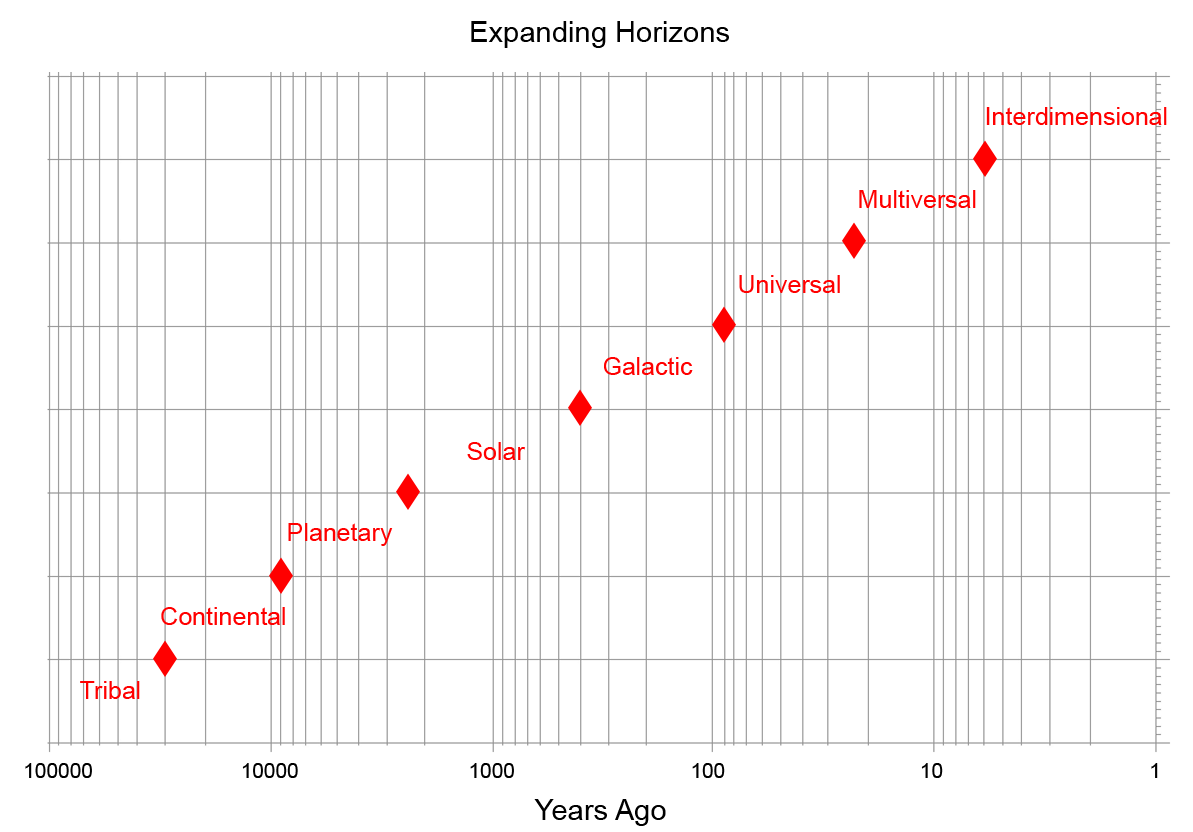
I sense one of those feelings of acceleration with the respect to the entire concept of expanding horizons, as if our understanding of “all that there is” is growing exponentially.  I was curious to see how exponential it actually was, so I took the liberty of plotting each discrete step in our evolution of awareness of “all that there is” on a logarithmic plot and guess what?

Almost perfectly exponential! (see below)

horizons

Dramatically, the trend points to a new expansion of our horizons in the past 10 years or so.  Could there really be a something beyond a multiverse of infinitely parallel universes?  And has such a concept recently been put forth?

Indeed there is and it has.  And, strangely, it isn’t even something new.  For millennia, the spiritual side of humanity has explored non-physical realities; Shamanism, Heaven, Nirvana, Mystical Experiences, Astral Travel.  Our Western scientific mentality that “nothing can exist that cannot be consistently and reliably reproduced in a lab” has prevented many of us from accepting these notions.  However, there is a new school of thought that is based on logic, scientific studies, and real data (if your mind is open), as well as personal knowledge and experience.  Call it digital physics (Fredkin), digital philosophy, simulation theory (Bostrom), programmed reality (yours truly), or My Big TOE (Campbell).  Tom Campbell and others have taken the step of incorporating into this philosophy the idea of non-material realms.  Which is, in fact, a new expansion of “all that there is.”  While I don’t particularly like the term “dimensional”, I’m not sure that we have a better descriptor.

Interdimensional Era

interdiensionalera200Or maybe we should just call it “All That There Is.”

At least until a few years from now.

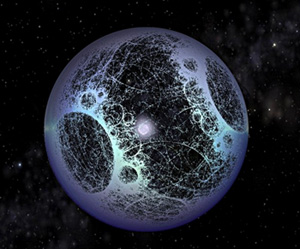
Alien Hunters Still Thinking Inside The Box (or Dyson Sphere)

As those who are familiar with my writing already know, I have long thought that the SETI program was highly illogical, for a number of reason, some of which are outlined here and here.

To summarize, it is the height of anthropomorphic and unimaginative thinking to assume that ET will evolve just like we did and develop radio technology at all.  Even if they did, and followed a technology evolution similar to our own, the era of high-powered radio broadcasts should be insignificant in relation to the duration of their evolutionary history.  In our own case even, that era is almost over, as we are moving to highly networked and low-powered data communication (e.g. Wi-Fi), which is barely detectable a few blocks away, let alone light years.  And even if we happened to overlap a 100-year radio broadcast era of a civilization in our galactic neighborhood, they would still never hear us, and vice versa, because the signal level required to reliably communicate around the world becomes lost in the noise of the cosmic microwave background radiation before it even leaves the solar system.

So, no, SETI is not the way to uncover extraterrestrial intelligences.

Dyson Sphere

Some astronomers are getting a bit more creative and are beginning to explore some different ways of detecting ET.  One such technique hinges on the concept of a Dyson Sphere.  Physicist Freeman Dyson postulated the idea in 1960, theorizing that advanced civilizations will continuously increase their demand for energy, to the point where they need to capture all of the energy of the star that they orbit.  A possible mechanism for doing so could be a network of satellites surrounding the solar system and collecting all of the energy of the star.  Theoretically, a signature of a distant Dyson Sphere would be a region of space emitting no visible light but generating high levels of infrared radiation as waste.  Some astronomers have mapped the sky over the years, searching for such signatures, but to no avail.

Today, a team at Penn State is resuming the search via data from infrared observatories WISE and Spitzer.  Another group from Princeton has also joined in the search, but are using a different technique by searching for dimming patterns in the data.

I applaud these scientists who are expanding the experimental boundaries a bit.  But I doubt that Dyson Spheres are the answer.  There are at least two flaws with this idea.

First, the assumption that we will continuously need more energy is false.  Part of the reason for this is the fact that once a nation has achieved a particular level of industrialization and technology, there is little to drive further demand.  The figure below, taken from The Atlantic article “A Short History of 200 Years of Global Energy Use” demonstrates this clearly.

per-capita-energy-consumption300

In addition, technological advances make it cheaper to obtain the same general benefit over time.  For example, in terms of computing, performing capacity per watt has increased by a factor of over one trillion in the past 50 years.  Dyson was unaware of this trend because Moore’s Law hadn’t been postulated until 1965.  Even in the highly corrupt oil industry, with their collusion, lobbying, and artificial scarcity, performance per gallon of gas has steadily increased over the years.

The second flaw with the Dyson Sphere argument is the more interesting one – the assumptions around how humans will evolve.  I am sure that in the booming 1960s, it seemed logical that we would be driven by the need to consume more and more, controlling more and more powerful tools as time went on.  But, all evidence actually points to the contrary.

We are in the beginning stages of a new facet of evolution as a species.  Not a physical one, but a consciousness-oriented one.  Quantum Mechanics has shown us that objective reality doesn’t exist.  Scientists are so frightened by the implications of this that they are for the most part in complete denial.  But the construct of reality is looking more and more like it is simply data.  And the evidence is overwhelming that consciousness is controlling the body and not emerging from it.  As individuals are beginning to understand this, they are beginning to recognize that they are not trapped by their bodies, nor this apparent physical reality.

Think about this from the perspective of the evolution of humanity.  If this trend continues, why will we even need the body?

Robert Monroe experienced a potential future (1000 years hence), which may be very much in line with the mega-trends that I have been discussing on theuniversesolved.com: “No sound, it was NVC [non-vocal communication]! We made it! Humans did it! We made the quantum jump from monkey chatter and all it implied.” (“Far Journeys“)

earthWe may continue to use the (virtual) physical reality as a “learning lab”, but since we won’t really need it, neither will we need the full energy of the virtual star.  And we can let virtual earth get back to the beautiful virtual place it once was.

THIS is why astronomers are not finding any sign of intelligent life in outer space, no matter what tools they use.  A sufficiently advanced civilization does not communicate using monkey chatter, nor any technological carrier like radio waves.

They use consciousness.

So will we, some day.